Celce Springorum
1423 - One of the Oldest Documents Found
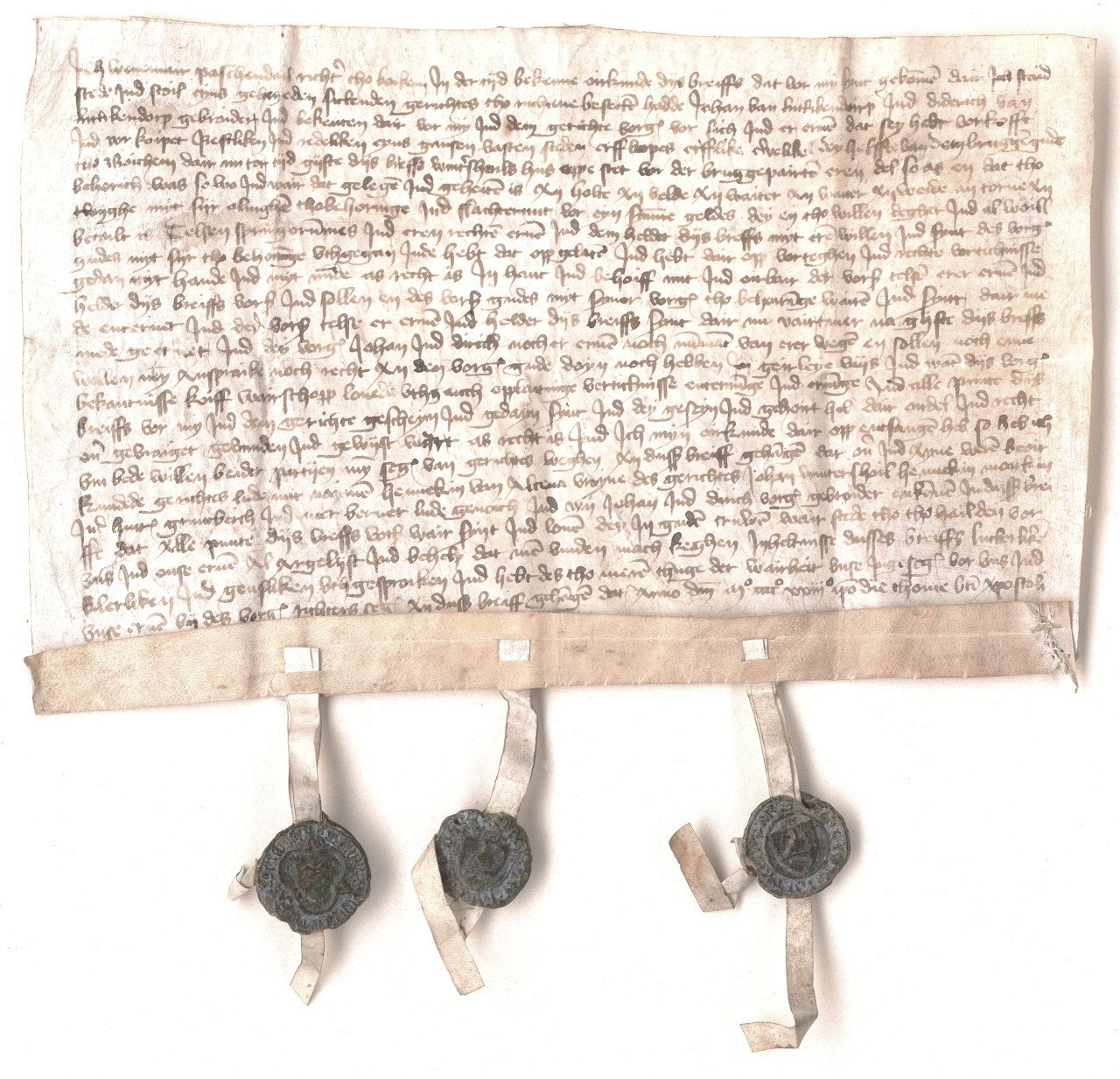
Image: Parchment charter: Deed of Sale before the Court of Bochum (1423)
Celce Springorum
Celce Springorum is the earliest known individual with the Springorum name in surviving documents. The first record of him dates to 21 December 1423: in a deed of sale before the Court of Bochum, two brothers, Johan and Diderich van Lutsikendorp, sold a hereditary estate “by the bridge at Bochum” (now the site of the Bishop’s house) to Celce Springorum. The deed includes all associated lands, woods, and rights, and affirms that the purchase was fully paid, with no remaining claims by the sellers or their heirs. Witnesses and seals authenticate the transaction.
| Year | Event | Role |
|---|---|---|
| 1423 | deed of sale of hereditary estate | Buyer |
I, Weinmair Paschende, judge at Bochum, hereby declare in this deed:
Before me and the court appeared the brothers Johan van Lutsikendorp and Diderich van Lichkendorp. They declared before me and the court that they had sold, fully transferred, and lawfully conveyed, a hereditary estate (erffkoop), namely a property they possessed by the bridge at Bochum, where now stands the bishop’s house, together with everything belonging to it: woods, fields, heath, meadows, shrubs, branches, and all further appurtenances.
This property was sold to Celse Springorum and his lawful heirs, for an agreed sum of money, which has been fully and satisfactorily paid. The sellers have handed over the property freely and lawfully, by word and hand, without coercion, and declare that they shall henceforth have no right or claim to it.
The heirs of the said sellers shall likewise have no claims in the future. All rights, uses, and obligations connected to this property now belong to Celse Springorum and his heirs.
In confirmation, this charter was drawn up and sealed in the presence of witnesses, among them Hennekin van Alcena, Johan Wintershoil, and others.
Done and ratified on 21 December 1423, the feast day of the holy apostle Thomas.
Ich, Weinmair Paschende, richter tho Bochum in der tiid, bekenne mit kunde diß brieffs, dat het my sint gekommen dair ich standstede und stois eyns gehouden siebenden gerichts, scheinen besegelt hadden Johan van Lutsikendorp und Diderich van Lichkendorp, gebroider.
Und bekenten dair vor my und dem gerichte borgen vor sich und eren, dat se hebt vorkoft und vorkoipet, geschiken und redeliken, eyns gansen lasten, siedens erffkopes erfflike, welke se heften van dem bruggen ende tho Bochum, dair nu to tid giste des bisschoffs hus oppestet, vor der bruggeparten eren, also as en dat tho behorig was, so luo unde wair dat gelegen und geheitet is, an holte, an belde, an haide, an varer, an weide, an torne und twyghe, mit sinen alingen tho behoringe und slachterunt.
Bor eyn samme geldes, dat en tho willen degher ind al vol betailt is, Celse Springorummes und eren rechte erve.
Und dem heldet diß brieffs mit eren willen, und synt des borg gudes mit schr[ift] to behoringe uthgegan, und hebt dat oppgelaten, und hebt dair op vorteghe und rechte vortichnisse gedan uth hande und uth minne, as recht is,
in hant und behoiff mit orbaer der vorseiden eren.
Und dem helde diß brieffs vors. Und sollen de vors. guden nyt synor borgen tho behorige waiten, und synt dair mede enrervet, und den vors. Celse er erven, Jans helde diß brieffs, sint dair nu vortmer, na gist diß brieffs, mede geerner, und den vorgenant Johan und Dirich, mocht ermen noch minemen van erer wegen, und sollen noch eine weilen min ansprake noch recht in den borgen gade doyn noch hebben, in Geirleye vuijs.
Und wat diß erkantnisse, kouff, wairschop, love, uthut, auch oplatzenge, vortichenisse, enterningen und enige und alle pünte diß brieffs, vor my und dem gericht geschehen und gedan sint, und die gesehen und gehoirt, hal dair andel und recht, ungefraiget, gebunden, und gewyst ligt as recht.
So send ich myn oirkunde dair, und hab dat entsangen, so hab ich uthi beide willen beider partijen my segen van gerultes loegen, an disse brieff gehangen dat on ind hyne lettere.
Beoir, frauwe gerichtes lude, mit noch men Hennekin van Alcena, vroyne des gerichts, Johan Wintershoil, Hemmich in Moork, und inde hur Gerneberch, und mer beruet lude geneich, und wie Johan und Dirich, vorgenoemde gebroider, erkennen in dessen brieff, dat alle pünte diß brieffs vors., mair syyt ind loven.
Dey in gadeur cruwen wairstede tho hailden, vor zins und onse erve allärgelyst und besche, dat inen bunden mach keghen jghchtnisse diß brieffs, lukkerlike, klerlike und geuslike, frauwe gesproiken.
Und hebt des tho merem thinge der wairheit buse, ingesegen vor was, und se et venere, bij des borgen dochters seel an diß brieff gehangen, dat Anno Domini anno XXIII, ipso die Thome beati Apostoli.